
Payments were long treated as the quiet, administrative back-office of corporate finance. As long as cross-border settlements cleared within a week and supplier invoices were eventually reconciled, enterprise leadership rarely questioned the underlying rails.
That tolerance for friction is no longer visible today. Fueled by global digital adoption (where consumer digital wallets are projected to exceed 5.2 billion users), the expectation for instant, transparent, and frictionless transactions has crossed over into the enterprise domain. Modern treasury teams no longer accept multi-day processing windows, manual clearing steps, or opaque intermediary fees. Traditional paper checks, which recently plummeted to representing just 26% of B2B transactions, are rapidly being retired in favor of automated, real-time alternatives.
In their place is a financial architecture defined by real-time settlement, closed-loop ecosystems, and automated governance. Navigating this shift, however, requires understanding the four key trends transforming B2B financial infrastructure across Europe and beyond.
In the past, moving capital across borders meant navigating a fragmented web of correspondent banking networks. Each intermediary in the chain introduced settlement friction, foreign exchange markups, and operational blind spots. As a company managing complex international supply chains or high-velocity digital business models, these clearing lags created severe liquidity bottlenecks.
Real-time settlement is no longer confined to domestic retail networks like SEPA Instant or Faster Payments in the UK. Higher transaction limits and improved messaging protocols on modern digital rails have unlocked high-value B2B payment corridors. International corporate transfers that previously took three to five business days can now settle within hours or minutes.
Cross-border settlement paths: legacy path vs modern path
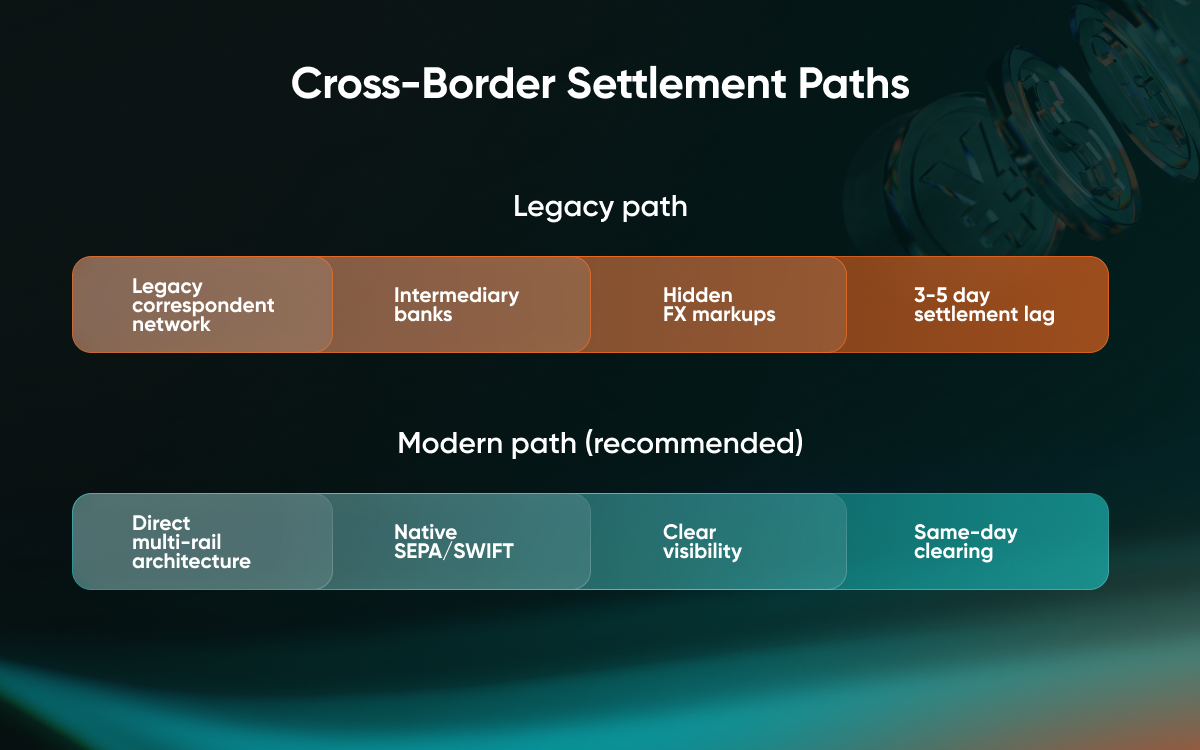
This speed transforms treasury strategy. When capital movement becomes predictable, corporate treasury teams reduce their reliance on large, idle cash buffers in foreign accounts to cover operational expenses. Instead, working capital stays centralized and flexible.
To capitalize on these higher-speed rails, payment service providers like Trumia are building direct infrastructure capable of handling complex cross-border flows. By offering multi-currency corporate accounts with integrated SEPA and SWIFT capabilities, Trumia enables international businesses to receive, convert, and disburse funds globally with transparent execution and minimal clearing friction.
While improving public clearing rails accelerates standard transfers, forward-thinking enterprises are asking a broader question: why rely on external banking clearing houses at all when trading with regular counter-parties?
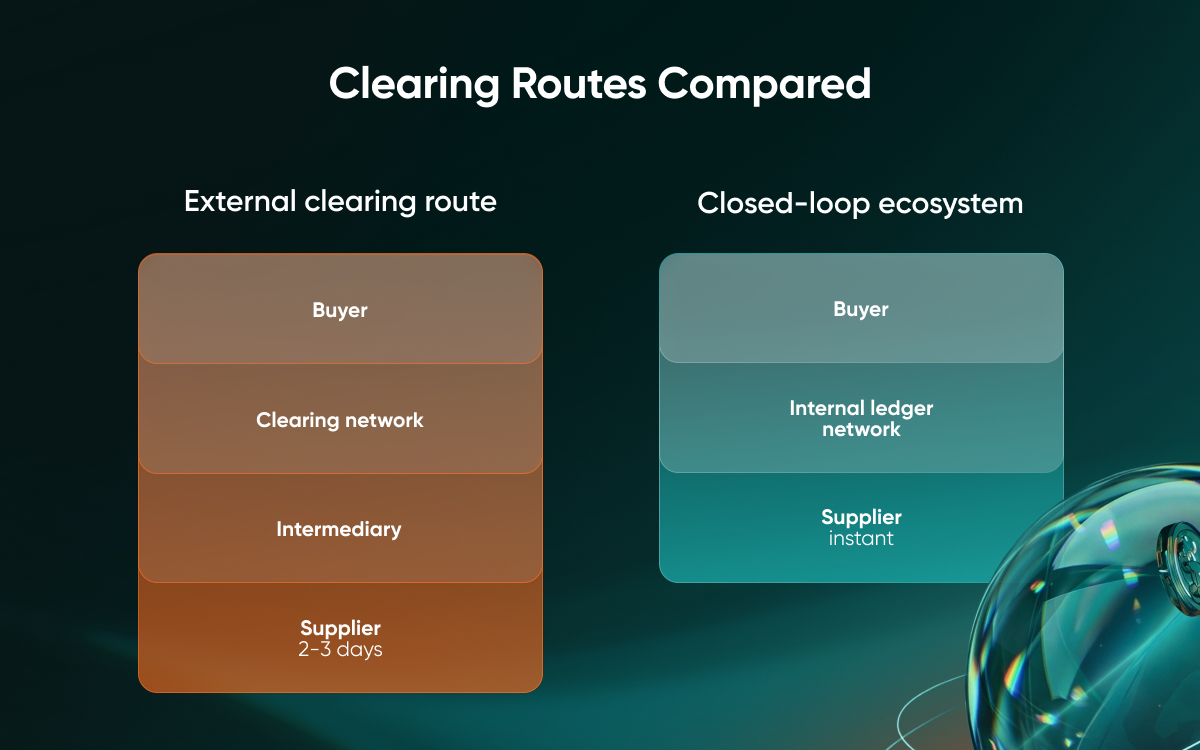
This question is driving the growth of closed-loop, peer-to-peer B2B financial networks. In a closed-loop system, buyers, platforms, and suppliers operate within the same unified infrastructure. Because transactions are executed on internal ledger systems rather than routed through external central banks or intermediary clearing houses, settlement is instant, 24/7, and free from external transaction fees.
Clearing routes compared: external clearing route vs closed-loop ecosystem
The operational advantages for commercial relationships are significant:
The Trumia ecosystem applies this concept directly to cross-border operations. How? Simply by enabling seamless peer-to-peer transfers between businesses operating on its platform, Trumia allows commercial networks to bypass external clearing hurdles, keeping liquidity moving across international supply lines without operational interruptions.
While speed and connectivity have distinct advantages, accelerating payment rails introduces new security vulnerabilities. In 2024, approximately 79% of organizations reported encountering attempted or actual payment fraud. When payment settlement shifts from days to seconds, the window available for compliance teams to detect, flag, and intercept fraudulent transactions shrinks dramatically.
Traditional security measures relied on static, manual approval steps that introduced friction into legitimate operational workflows. Modern security architectures require intelligent, invisible controls that run continuously in the background.
The next generation of corporate risk management combines real-time transaction monitoring with machine learning models that evaluate behavioral baselines. Instead of freezing accounts with rigid rules, AI-driven engines assess transaction risk dynamically by analyzing factors such as:
Security cannot exist in a vacuum, and it always must be grounded in structural regulatory compliance. There has to be a balance between operational velocity and rigorous European regulatory frameworks. Regulated under the Malta Financial Services Authority (MFSA), Trumia integrates advanced fraud monitoring into its core infrastructure while maintaining strict safeguarding protocols to ensure corporate capital remains protected without slowing down daily business execution.
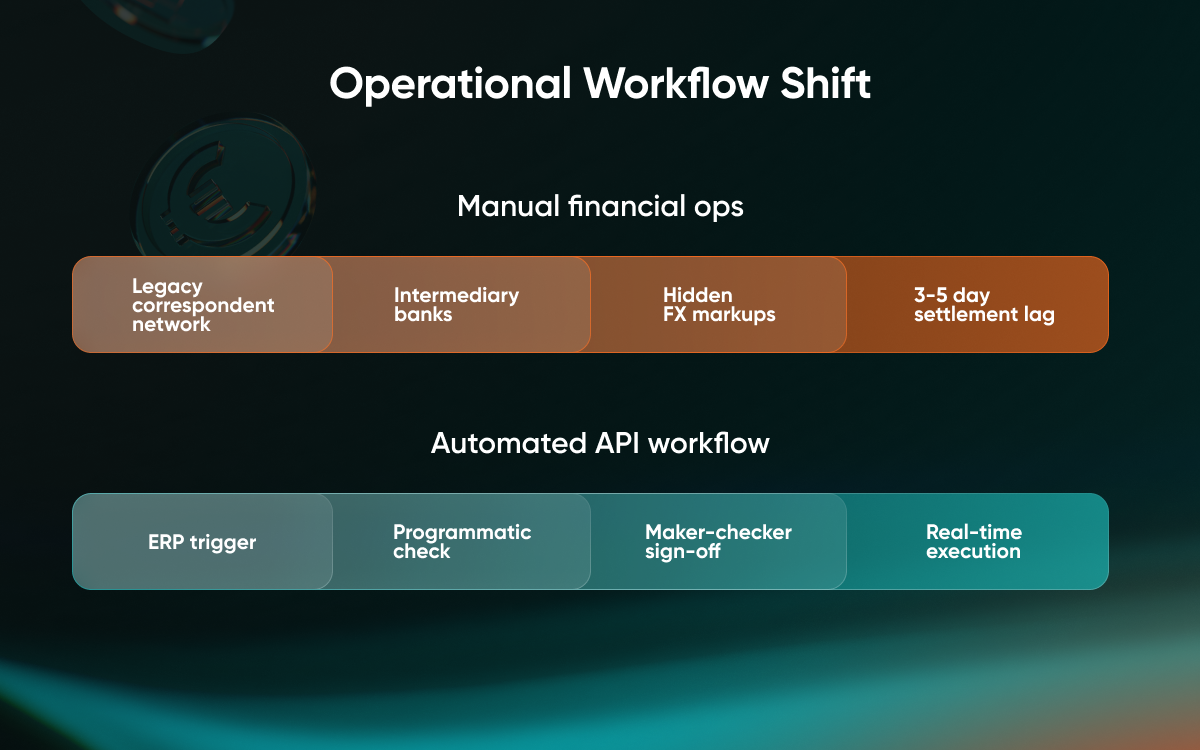
Corporate payments no longer function in isolation from broader enterprise operations. Finance leaders demand that payment infrastructure connects directly into Enterprise Resource Planning (ERP) tools, accounting software, and operational dashboards.
Automating routine financial tasks (such as generating dedicated virtual IBANs for new clients, executing bulk payroll uploads via CSV/XML files, or initiating recurring payouts) eliminates human error and frees finance personnel to focus on strategic capital allocation.
Furthermore, integrated APIs allow platforms to implement internal risk controls like Maker-Checker governance, where one manager initiates a payout batch and a secondary executive verifies it before release.
However, full automation has revealed a distinct limitation in corporate financial services. When complex multi-currency transactions stall due to regional intermediary inquiries or unique regulatory checks, automated support ticket queues create severe operational bottlenecks.
Modern corporate payments demand a hybrid model that blends technical automation with accessible human expertise. Trumia addresses this balance by pairing a modern API-first technical architecture with a Dedicated Account Manager for every corporate client. This ensures that while routine transactions process programmatically, treasury teams retain direct access to experienced specialists who understand their unique operational structures and cross-border payment flows.
The transformation of B2B payments reflects a broader shift in how modern enterprises view financial operations. Payment processing, cross-border settlement, and multi-currency treasury management are core components of operational agility.
As European companies expand globally, the organizations that thrive will be those that retire legacy banking processes in favor of flexible, API-driven infrastructure. Just by leveraging modern solutions, businesses can remove systemic friction, optimize liquidity, and turn payment execution into a sustainable competitive advantage.


.svg)
Address:
Quad Central, Q3 Level 3, Triq
l-Esportaturi, Zone 1, Central Business District, Birkirkara, CBD 1040, Malta
Email Address:
contactus@trumia.com
For Press Inquiries:
press.office@trumia.com
.avif)
