
European businesses no longer operate within the comfort of geographic borders. A mid-sized B2B SaaS platform in Berlin or a marketplace operator in Malta can source talent from Eastern Europe, host servers in the Americas, and acquire business users across Asia-Pacific overnight. The globalization of the digital economy has flattened distribution, making international expansion a default milestone rather than a long-term aspiration.
Yet, as target markets expand, the invisible infrastructure holding these operations together is being pushed to its limit. Expansion is fundamentally a financial challenge. The friction point is rarely the product or the market demand, but rather the movement of money across jurisdictions, a reality that forces companies to carefully evaluate their choice of a B2B payment solution.
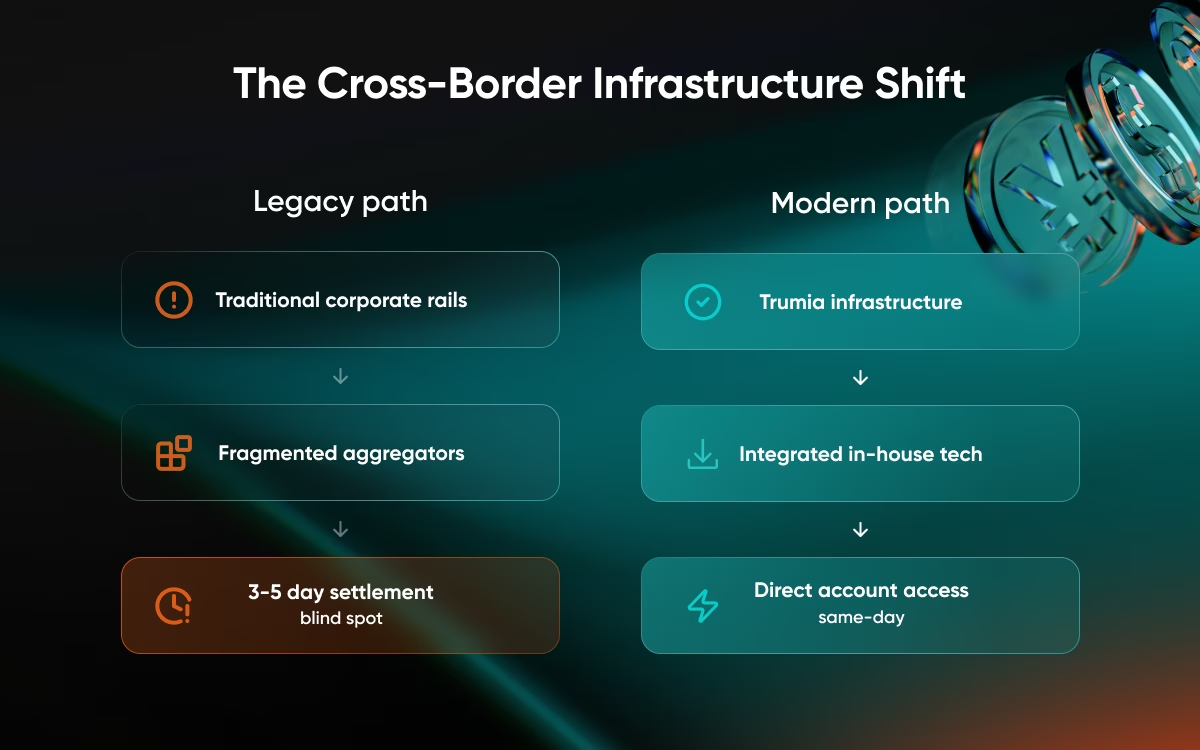
When a business steps outside the Single Euro Payments Area (SEPA), it encounters a highly fragmented landscape. Operating internationally means navigating a maze of distinct regulatory environments, volatile foreign exchange mechanisms, and deeply entrenched local payment methods.
When capital is trapped in clearing cycles for three to five business days, corporate treasury teams lose liquidity, forecasting becomes inaccurate, and the ability to scale depends on cash reserves rather than current revenue.
Historically, businesses treated corporate payment processing as a utility, a line-item expense handled by accounting to simply move funds from point A to point B. That perspective is outdated. In the current European landscape, financial infrastructure acts as a direct lever for business growth, user retention, and enterprise risk management.
Choosing the right Payment Services Provider means looking past basic settlement. Consider the user experience. The relationship with a corporate client or platform user does not end when they click "pay”, it begins there. If a payout is delayed because a cross-border rail stalls, trust breaks down immediately. Conversely, predictable payment execution is a silent retention mechanism.
Also, smart infrastructure serves as a primary tool for risk management. High-volume business models require strong internal workflows to prevent unauthorized capital movement. Relying on simple, automated straight-through processing without operational checks creates catastrophic vulnerabilities. Modern financial operations need systems that support advanced governance (such as the Maker-Checker model) where one team member initiates a high-volume batch payout and a designated risk officer reviews and releases it.
The criteria for evaluating a modern B2B payment platform has shifted from basic card processing to more complex treasury capabilities such as:
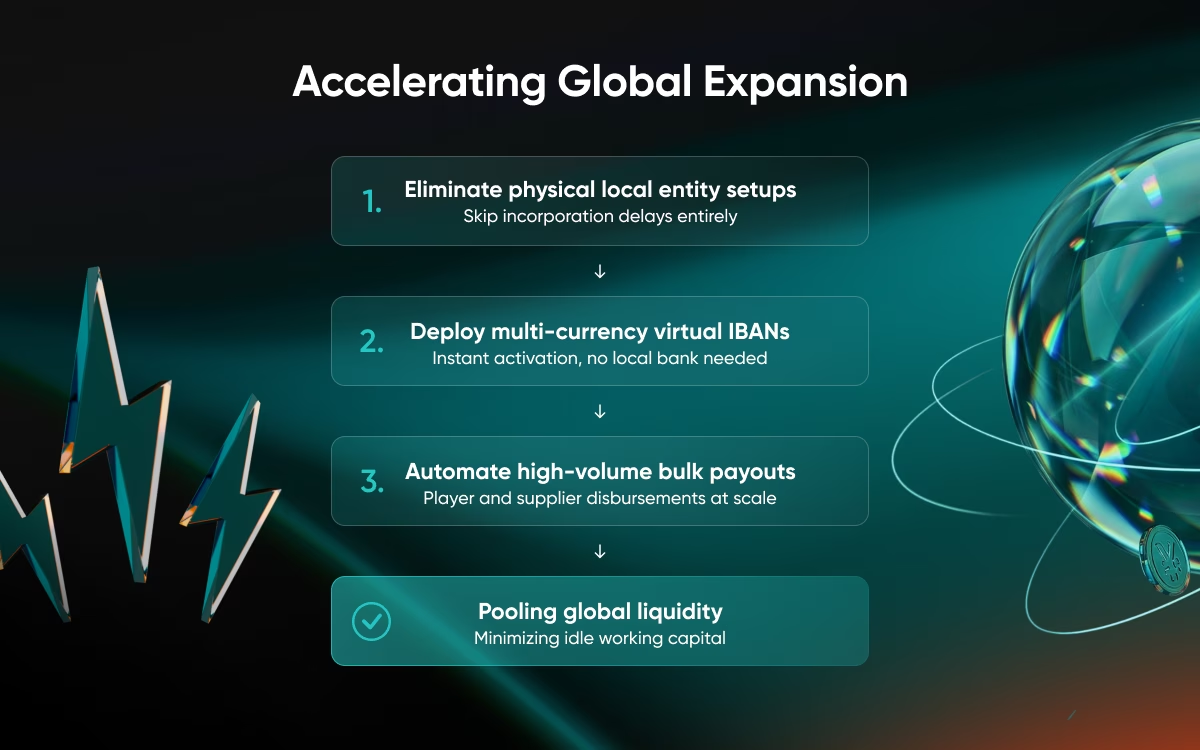
Expanding into a new market can be expensive. If every new region requires a business to set up a local entity, open a local bank account, and integrate a localized payment gateway, the cost of expansion becomes prohibitive.
A great B2B payment platform removes this friction by abstracting the complexity of local banking networks. By utilizing a single comprehensive B2B payment solution capable of managing a multi-currency treasury, businesses can enter new territories without heavy physical infrastructure. They can collect regional currencies, execute real-time conversions, and automate high-volume payouts via file uploads (such as CSV or XML) directly from a centralized hub.
This acceleration of cash flow completely alters the corporate unit economics. Instead of holding significant working capital in idle local accounts to handle regional expenditures, businesses can pool their liquidity globally, lowering operational costs and maximizing the utility of every euro generated.
The way modern financial operations work is dictated by the technology underneath. Legacy financial networks frequently operate on top of decades-old core banking systems, using software wrappers to look modern on the outside while relying on batch processing. A modern Payment Services Provider, by contrast, builds with a digital-first philosophy.
Real-time processing engines remove the concept of "banking hours." When an infrastructure provider builds its own technology stack, it eliminates dependency on third-party software updates. In-house development allows for rapid adaptation, tighter security configurations, and payment orchestration that dynamically routes capital through the most cost-effective and reliable payment rails available at that exact second.
In European business, operational agility is worthless without regulatory stability. The financial technology sector has seen a sharp shift toward stricter supervision, and rightly so. Businesses navigating high-stakes environments need to know that their payment partner is built on concrete foundations.
Operating as a licensed and regulated Electronic Money Institution (EMI) under major European bodies, such as the Malta Financial Services Authority (MFSA), requires an experienced Payment Services Provider to adhere to strict operational standards. The most critical of these is the implementation of rigorous safeguarding protocols. Unlike traditional commercial banks that use client deposits to fund commercial loan portfolios, a regulated EMI must keep all client capital completely segregated and protected within top-tier banks in the EU.
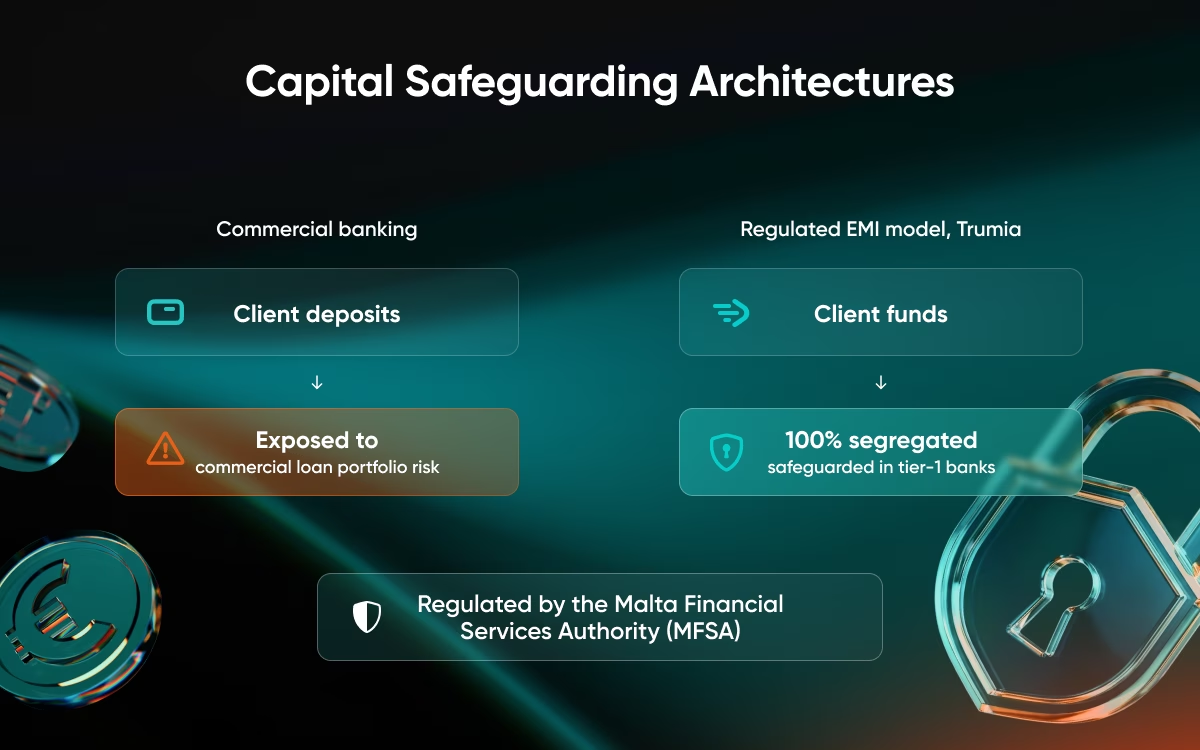
This strict segregation guarantees that no matter the macroeconomic climate, operational capital remains safe, liquid, and accessible. True compliance means combining this regulatory discipline with proactive geographic guardrails, deliberately blocking transactions involving high-risk jurisdictions to preserve the integrity and long-term stability of the entire corporate banking network.
Operating as an authorized Electronic Money Institution licensed by the Malta Financial Services Authority (MFSA) under Article 5 of the Financial Institutions Act, Trumia provides the payment infrastructure designed for high-growth corporate entities and private individuals navigating complex financial ecosystems.
Trumia was built to eliminate the fragmentation that slows down global operations. Rather than acting as another third-party Payment Services Provider, Trumia designs and builds its entire technology stack completely in-house. This complete control over internal infrastructure makes it possible to build direct paths between merchant processing and corporate treasury management.
For businesses operating across the EU and EEA, Trumia provides:
Trumia’s focus is on partnership, not transactional vendor relationships. Since every corporate client gets a dedicated Account Manager, automated support queues are replaced with tailored corporate treasury expertise. The goal is to ensure that as your business model scales, your underlying payment rails adapt alongside it.
The evolution of B2B commerce points toward deeper financial integration. Over the coming years, the line between business software and financial services will blur entirely through the expansion of embedded finance. Enterprises will rely on an integrated B2B payment platform to natively issue cards, manage treasury, and route cross-border liquidity without users interacting with a separate financial app.
Simultaneously, the widespread adoption of Open Banking APIs and real-time payment rails like SEPA Instant will continue to shorten settlement windows globally. AI will move deeper into the background, shifting from simple post-transaction fraud reviews to real-time behavioral transaction analytics that protect corporate ecosystems without interrupting legitimate cash flows.
The globalization of commerce is irreversible. As European businesses continue to acquire international market share, the winners will be determined by the speed, security, and predictability of their B2B payment solution. Building on direct, in-house, and deeply regulated technology is the foundation for borderless growth.


.svg)
Address:
Quad Central, Q3 Level 3, Triq
l-Esportaturi, Zone 1, Central Business District, Birkirkara, CBD 1040, Malta
Email Address:
contactus@trumia.com
For Press Inquiries:
press.office@trumia.com
.avif)
